From a sentence to solid gold
What happens between "she loves the ocean" and a finished ring — the seven steps, who does each one, and the points where a design gets rejected.
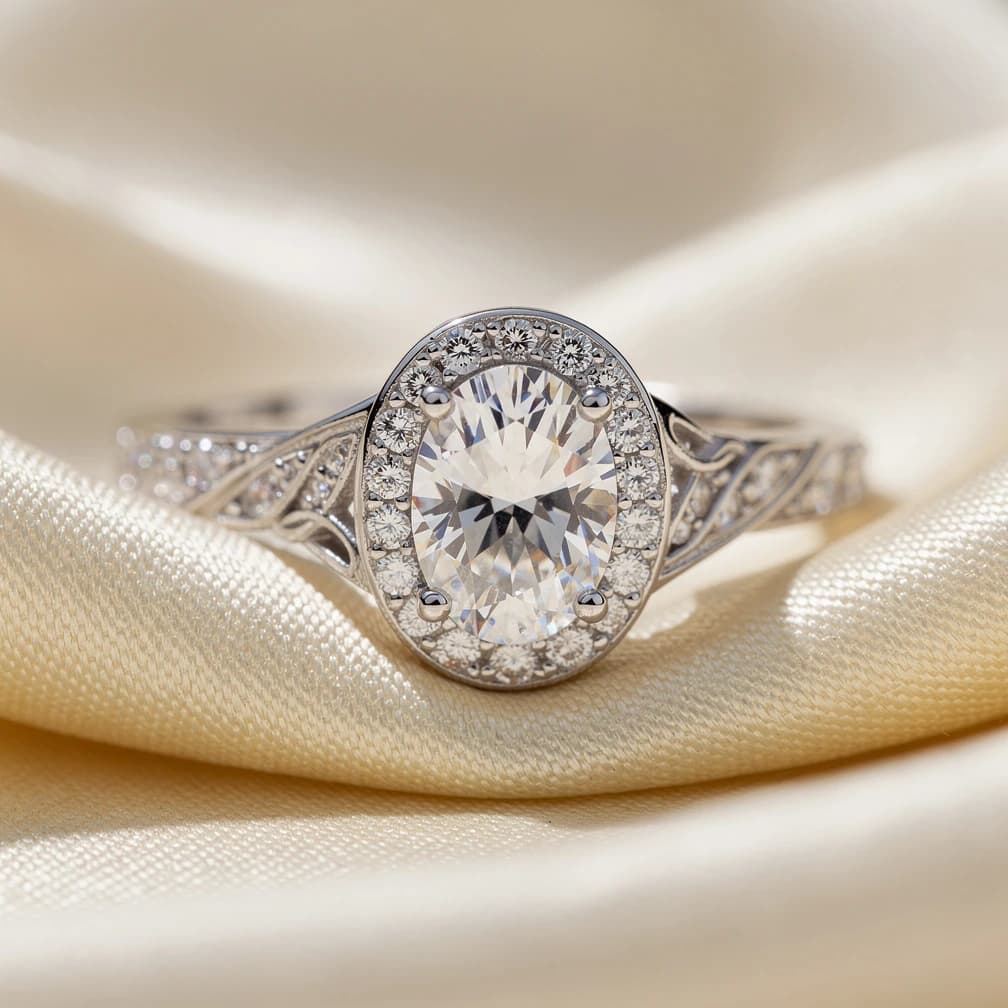
The most common question we get is not about price. It is some version of: what actually happens after I hit the button?
Here is the whole route, including the parts that fail.
1. The brief
You answer a short quiz — occasion, style, stone, metal, and anything personal you want carried into the piece. The free-text answers matter more than people expect. "She loves the ocean, we met in Maine" produces a different design than "wave motif" does, because the first one tells us what the piece is for.
2. The concept
Your brief becomes an image. This is the step people mean when they say "AI jewellery", and it is genuinely useful: it explores far more shapes in an hour than a sketchpad does, and it lets you react to something concrete instead of describing an idea into the air.
It is also the step with the least authority. An image can show a setting that cannot hold a stone, prongs too thin to cast, or a band that would snap. It is a proposal.
3. The reality pass
A jeweller takes the concept apart against the rules that physical objects obey:
- Wall thicknesses heavy enough to cast and survive wear
- Prong geometry that actually retains the stone, with fillets where they meet the band
- A shank cross-section in the range that wears comfortably and does not bend
- A stone seat cut for the real, calibrated stone — not the one the image imagined
Concepts get rejected here, and that is the step doing the work. A design that looks beautiful and cannot be worn is not a design.
4. Your approval
You see the corrected version before anything is made. If it is wrong, we go back — this is the cheapest possible moment to change your mind, and we would much rather spend the time here than after casting.
Nothing is manufactured until you approve.
5. Wax and casting
The approved model is printed in wax, invested in plaster, and the wax is burned out — the lost-wax method, essentially unchanged for millennia. Molten metal fills the void left behind. We cast in solid 14K or 18K gold; there is no plating step, because there is nothing underneath to plate.
6. The bench
Casting produces a rough object, not a piece of jewellery. It is filed, pre-polished, the stone is set by hand, and it is finished. This stage is entirely human and it is where quality is actually decided. A well-designed piece finished badly is a bad piece.
7. The record
The stone's IGI certificate, the certificate of uniqueness, and the note that the master model has been destroyed. Then it ships, insured.
Seven steps, and only one of them is AI. That ratio is deliberate — and it is roughly the opposite of how the category markets itself.
How long it takes
Concept within hours. Revisions at your pace, and most people take a few days. Once you approve, manufacture and finishing run to the schedule we give you at approval — it depends on the piece, and we would rather quote yours than publish an average that turns out to be a promise we did not make.
Ready to start? Design your one-of-one — the quiz takes about two minutes.