Lab-grown diamonds, honestly
They are real diamonds — not simulants. Here is what actually differs from mined stones, what does not, and the one thing worth knowing before you buy.
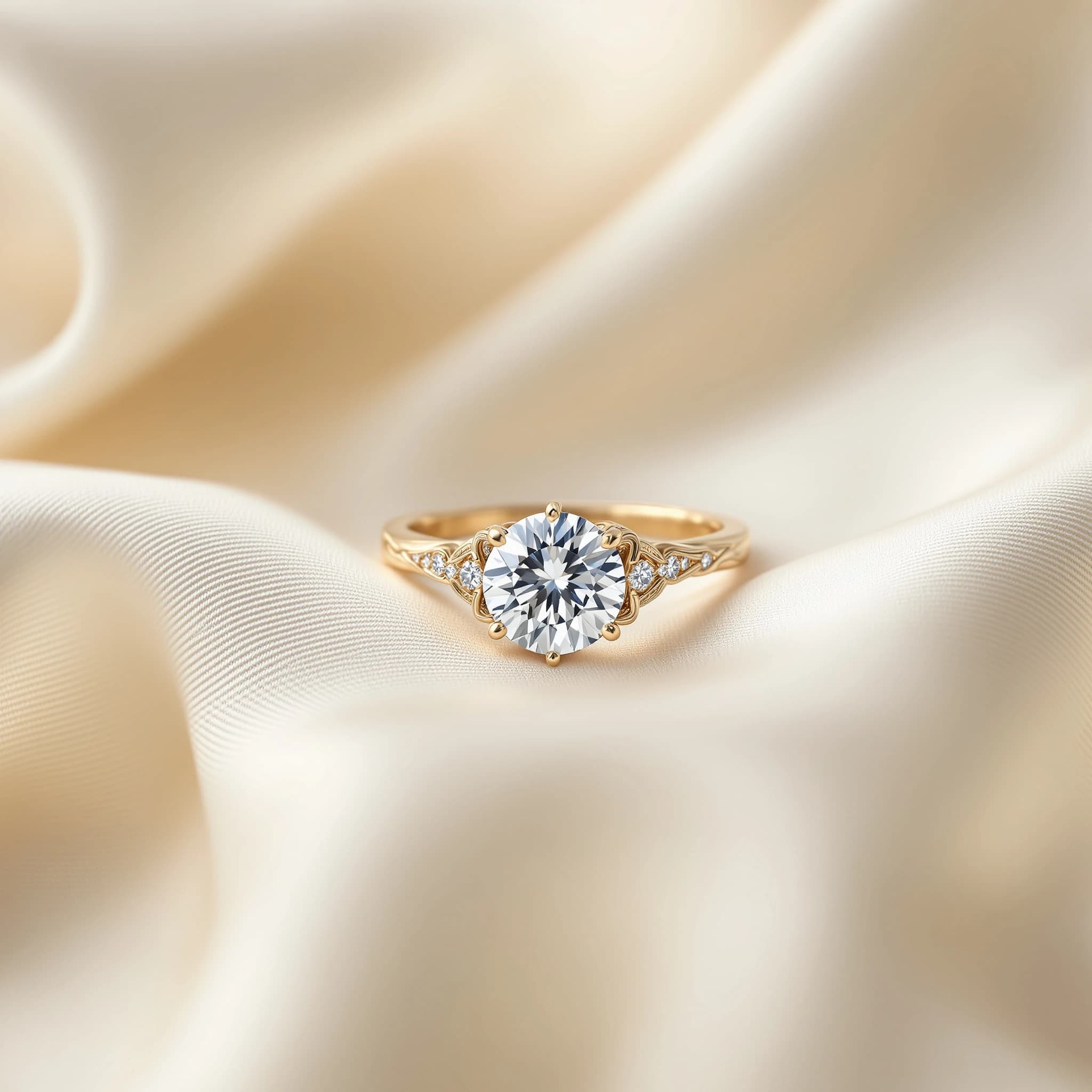
Every jeweller selling lab-grown stones tells you they are "real diamonds." That is true, and it is also the least useful sentence in the conversation. Here is the version we would give a friend.
What a lab-grown diamond is
It is carbon, crystallised in the same cubic lattice as a mined diamond, with the same hardness, the same refractive index, the same fire. A gemmologist cannot tell the difference by looking. Neither can a jeweller, and neither can the person complimenting your ring.
The distinction is origin, not substance. A mined diamond formed under a continent over a geological timescale. A lab-grown diamond formed in a reactor over a few weeks, by recreating the conditions that continent provided.
Two methods dominate:
- HPHT — high pressure, high temperature. Brute-force replication of the geology.
- CVD — chemical vapour deposition. Carbon is grown onto a seed crystal, layer by layer, from gas.
Both produce genuine diamond. CVD is what most modern fine jewellery uses.
What actually differs
Price. This is the honest headline. A lab-grown stone typically costs a fraction of a mined equivalent of the same carat, colour and clarity. That difference is what lets a custom piece carry a larger, better-graded centre stone at the same budget.
Traceability. A lab stone has a known reactor and a known date. A mined stone has a chain of custody that is usually documented and occasionally not.
Resale. Mined diamonds hold a secondary market that lab-grown stones do not, and prices for lab-grown have fallen steadily as capacity grew. If you are buying an investment, buy something else — no diamond, mined or grown, is a good one. If you are buying jewellery to wear, this matters far less than the industry implies.
What does not differ
Durability. Both are 10 on the Mohs scale and both will outlive you. A lab-grown stone does not cloud, dull, or "wear out" — that claim recurs online and it is simply false.
Certification. Reputable lab-grown stones are graded by the same laboratories, on the same 4Cs, as mined stones. We use IGI-certified stones and the certificate travels with the piece.
The one thing worth knowing
Grading is slightly softer at the margins for lab-grown than for mined stones at some laboratories, which means two stones with identical paper can look different in the hand. This is why we specify the stone against the actual design rather than against a spreadsheet — a colour grade that vanishes in a yellow-gold setting will show plainly in white gold.
Buy the stone that looks right in the piece it is going into. The certificate is evidence, not the point.
Where we stand
We use lab-grown, IGI-certified stones in every piece, and we say so on every page. Not because mined diamonds are indefensible, but because for made-to-order jewellery the economics let us put a materially better stone into your design — and because a stone with a known origin is easier to stand behind.
If you would rather have a mined stone, we will source one and tell you exactly what the difference costs.