Why our colour is purple
For most of recorded history, one colour was so scarce that the law decided who was allowed to wear it — and eventually the answer was one person. That is a strange amount of overlap with what we do.
Every house that lasts ends up owning a colour. Tiffany has its blue, Cartier its red, Hermès its orange. Ours is purple, and we did not choose it because it looked good on a website.
The most expensive colour ever made
Tyrian purple was extracted from sea snails — Murex — along the Phoenician coast. The process was appalling: the glands were removed by hand, left to rot in the sun, then boiled for days. The smell was so bad that dyeworks were pushed to the edges of cities.
The yield is the part that stops you. Twelve thousand snails produced about 1.4 grams of pure dye — roughly eight thousand animals for a single gram. That was enough to colour the trim of one garment. Not the garment. The trim.
This is why a pound of purple wool could cost more than a labourer earned in years, and why the colour became a way of saying something that had nothing to do with taste.
Then the law got involved
Because it could not be faked and could not be afforded, purple turned into a legal category. Roman sumptuary law — the rules that dictate who may use which luxuries — began restricting it to senior officials. The most senior magistrates wore the toga praetexta, white with a purple border. A general celebrating a triumph wore the toga picta: solid purple, edged in gold, for one day.
Then it narrowed. By the fourth century the law had reduced the circle to a single person: the emperor. Wearing full purple without the rank could be treated as treason. The phrase "to wear the purple" stopped describing clothing and started meaning the throne itself.
One colour. One wearer. Enforced.
Why that matters to a jeweller
We make one piece for one person and then destroy the master model, so the design cannot be produced again — not for another client, not for the same client, not by us.
We did not invent that idea. We found a colour that had already lived it.
The overlap is not a metaphor we reached for. Purple was rare because of what it took to make, exclusive because of what it cost, and singular because someone wrote it down. Our pieces are singular because we decided they would be, and we put it in writing too — the certificate that ships with every piece records the date the master model was destroyed.
What you will actually see
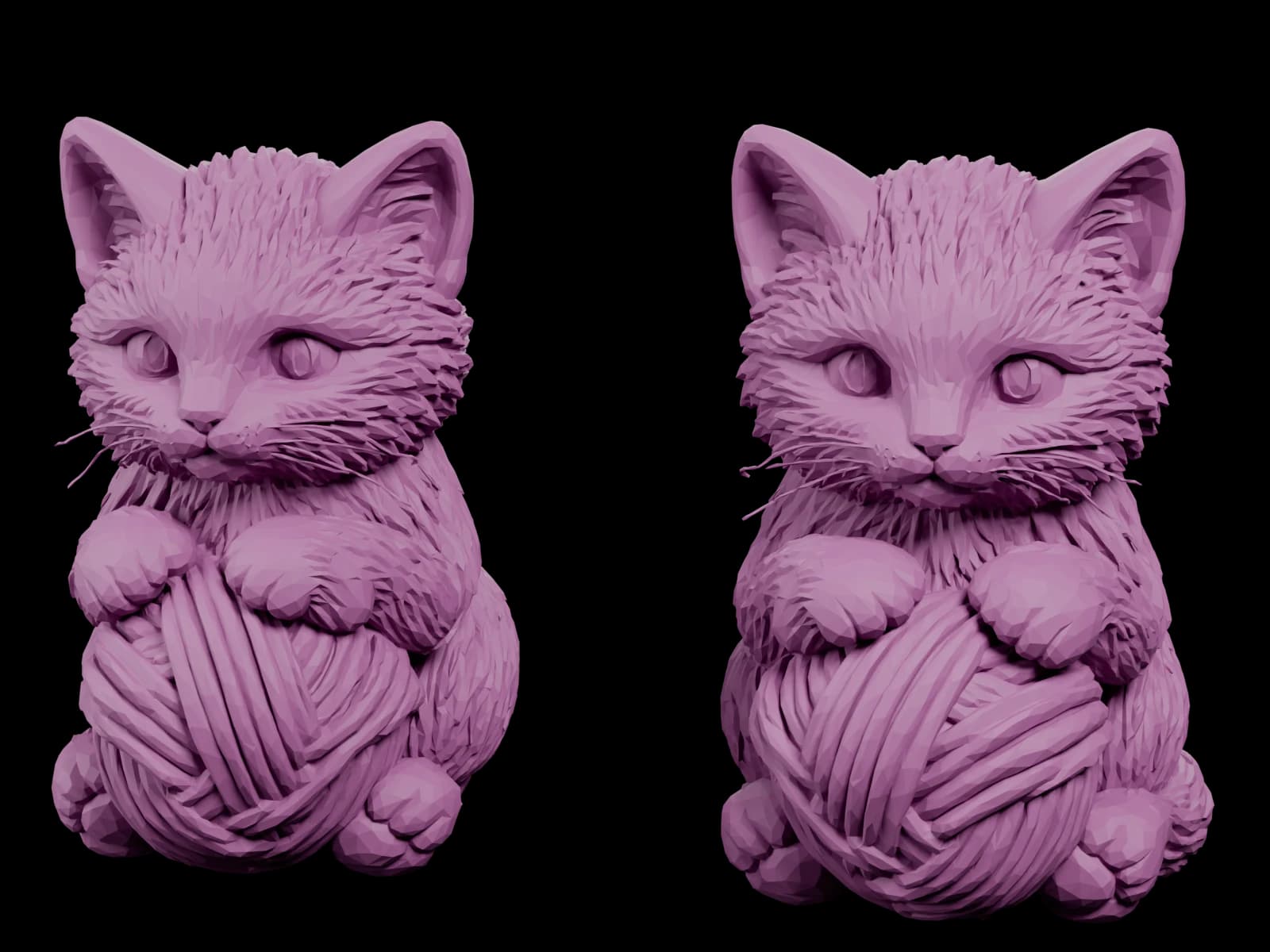
Purple is the colour of the house, not of the jewellery. You will see it in our 3D views, on this site, in the box.
The piece itself is what you chose: solid 14K or 18K gold, yellow, white or rose, set with IGI-certified lab-grown diamonds. On every product page the metal is shown as the metal actually is. We would rather you be surprised by nothing.
One more thing worth saying plainly. The Roman version of exclusivity was about rank — the colour marked who outranked you. Ours is the opposite. The piece is not proof that you are above anyone. It is proof that nobody else has this one.
Design your one-of-one — the quiz takes about two minutes, and nothing is made until you approve it.